If you’ve noticed your child developing or communicating differently from others their age, it’s natural to have questions about what these differences mean. You may be wondering how to get an autism diagnosis, what the assessment process involves, and how much autism assessment costs.
Let’s break it down. Understanding how the process works can make it easier to know what to expect and where to begin.
Step 1: Noticing Developmental Differences
If you’d like to learn more about the signs to look out for, we’ve covered the early signs of autism in a separate guide. Some common signs may include:
- Different ways of communicating or interacting with others
- Differences in language development
- Responding inconsistently to their name
- Repetitive movements or play
- Strong preferences for routines or predictability
- Sensory experiences that seem more or less intense than those of other children
We recommend recording your observations over time, including when and where they occur. These observations can provide valuable information during an assessment. But an autism diagnosis involves looking at the broader pattern of your child’s development, communication and behaviour. This is why the next step is even more important.
Step 2: Consulting with Your GP and Getting Referred
Most families begin with a GP visit. Bring your observations, and your GP will review your child’s developmental history before deciding on next steps.
If you want to access Medicare rebates, the referral pathway matters. Your GP can refer your child to a paediatrician or psychologist. They can then involve other professionals, such as a psychologist or speech pathologist, as part of the assessment.
Medicare rebates may apply to eligible allied health autism assessments in Melbourne (and other areas in Victoria) if you follow the appropriate referral pathway. If you choose to see a specialist privately without a referral, you will generally need to cover the full cost yourself.
Step 3: Completing a Comprehensive Developmental Assessment
A team of specialists gathers information from several sources to build a full picture over time for your child’s development. The assessment team may include:
- Developmental paediatrician
- Psychologist or Neurologist
- Speech Pathologist
- Occupational Therapist
- Developmental Educator
Depending on your child’s needs, the assessment specialists may use:
- Parent interviews
- Developmental history
- Direct observations
- Standardised assessment tools (e.g. ADOS-2, ADI-R)
- Information from childcare or school (when appropriate)
Each professional brings a different perspective, helping build a fuller picture of your child’s strengths and support needs.
How the DSM-5 Guides a Diagnosis
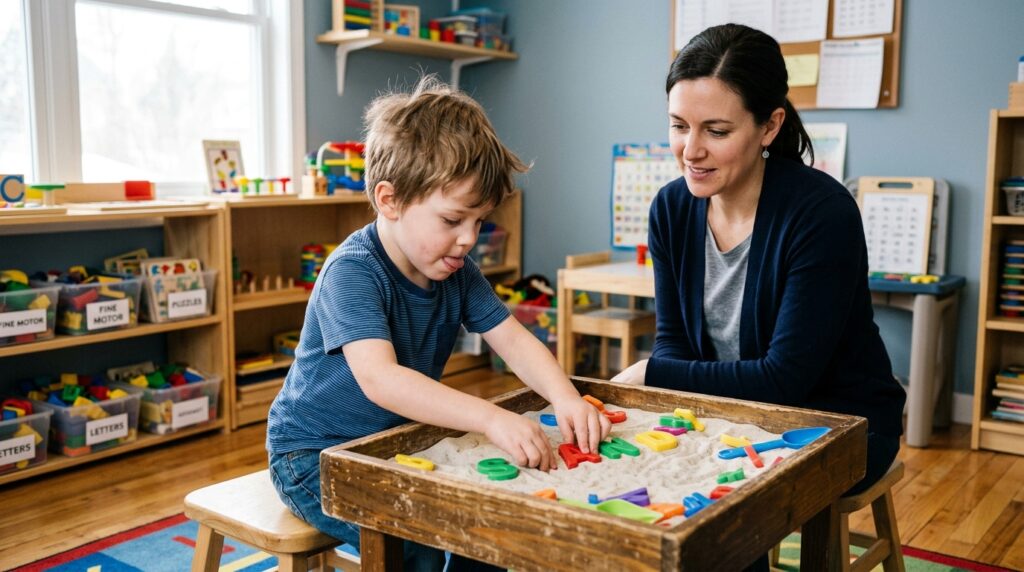
Australian clinicians use the Diagnostic and Statistical Manual of Mental Disorders, Fifth Edition (DSM-5), as the standard diagnostic framework. They consider whether these characteristics have been present since early childhood, and how they affect your child’s everyday life at home, in early learning settings or at school. They also consider whether autism best explains what they’re seeing or whether another condition may better account for these characteristics. Ultimately, clinicians rely on the overall pattern, not any single behaviour, to make a considered diagnosis.
Autism Assessment Cost: What Victorian Families Can Expect
Autism assessment costs vary from one provider to another. The table below maps approximate costs against each stage described above, current as of 1 July 2026, when Medicare’s rebate figures were last reviewed.
Stage | What’s Involved | Medicare Rebate (from 1 July 2026) | Typical Out-of-Pocket |
Out-of-hospital GP visit | Initial discussion and referral | Standard GP rebate applies, often bulk-billed | Usually minimal or nil |
Paediatrician or psychiatrist consultation | Assessment and diagnosis if one is confirmed | Rebate available under standard specialist and Complex Neurodevelopmental Disorder items | Gap fee remains, set by the provider |
Allied health assessment sessions | E.g. a psychologist administering the ADOS-2 or ADI-R, up to 2-4 sessions across the whole process | $101.55 per session for a registered psychologist, or $149.05 for a clinical psychologist | Gap fee per session, set by the provider |
Full private pathway, start to finish | GP visit through to a written report | Rebates offset part of the total cost | $1,500 to $2,000 or more, depending on individual assessment requirements. |

How Long It Takes: Wait Times in Victoria
Timeframes vary and shift throughout the year, so ask providers directly. Generally, community clinics in Victoria run anywhere from 6 months to well over a year. Private providers are usually faster, often 4 to 6 weeks from referral to assessment.
Support After a Diagnosis
What comes next depends on your child’s support needs. Children with higher support needs can apply for NDIS early childhood intervention funding.
For children with mild to moderate needs, a new national program is also rolling out from October 2026. Our guide to what the Thriving Kids Program is explains how it works and who it may support.
From there, therapies like the Early Start Denver Model (ESDM) can begin building on your child’s strengths straight away. Many families also bring in a developmental educator to translate assessment findings into everyday goals. Others find autism counselling helpful for processing the diagnosis as a family.
Getting the Right Support Around You
There’s no one-size-fits-all on how to get an autism diagnosis. At Solongo, our specialist expertise, individualised planning, and genuine family partnership mean we individualise support around your child from day one, whatever stage of the journey you’re at.
If you’d like to learn more before getting started, our guide to the importance of early childhood intervention offers a helpful place to begin.
And whenever you’re ready, we’re here to talk through what the process could look like for your family.